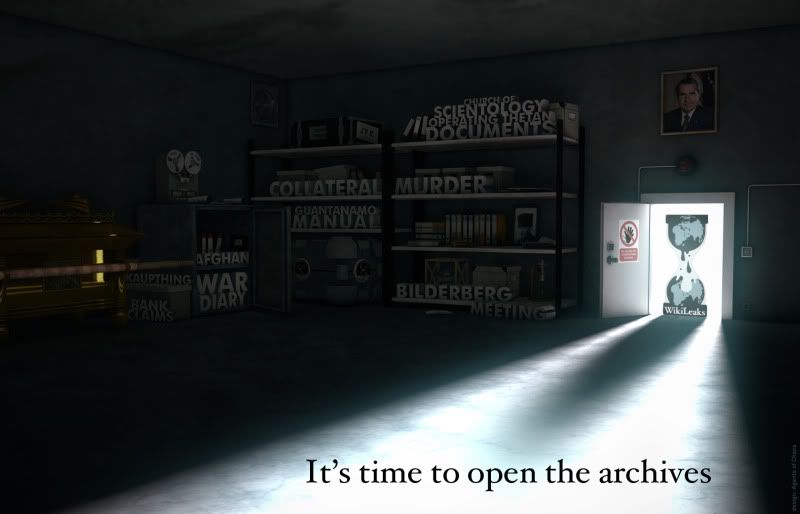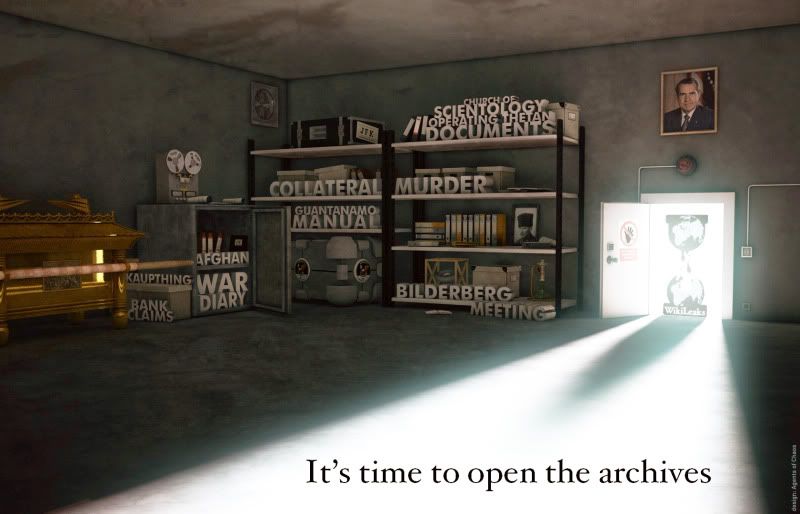

WIKILEAKS... WHAT THE F#CK? thread
- Thread starter Grapes Of Wrath
- Start date


gotta love when the gov pretty much says where not allowed to know the truth and if we seek it its illegal aka treason lol.
ole corrupt ass rich & politicians can all die slow, ruining the entire country and history for their OWN greed. what the fuck difference is it gonna make if you get that extra billion when u have 500 already and have no kids. lol Greed for no reason other than to be a piece of shit
ole corrupt ass rich & politicians can all die slow, ruining the entire country and history for their OWN greed. what the fuck difference is it gonna make if you get that extra billion when u have 500 already and have no kids. lol Greed for no reason other than to be a piece of shit


Hackers attack sites considered Wikileaks foes
By John F. Burns and Ravi Somaiya
New York Times
Posted: 12/08/2010 07:34:40 PM PST
Updated: 12/08/2010 09:42:30 PM PST
LONDON -- In a campaign that had some declaring the start of a "cyberwar," hundreds of Internet activists mounted retaliatory attacks Wednesday on the websites of multinational companies and other organizations they deemed hostile to the WikiLeaks anti-secrecy organization and its jailed founder, Julian Assange.
Within 12 hours of a British judge's decision Tuesday to deny Assange bail in a Swedish extradition case, attacks on the websites of WikiLeaks' "enemies," as defined by the organization's impassioned supporters, caused several corporate websites to become unavailable or slow down markedly.
Targets of the attacks included MasterCard.com, which had stopped processing donations for WikiLeaks; Amazon.com, which revoked the use of its computer servers; and the online payment service PayPal, which cut off its services.
Visa.com was also affected by the attacks, as was the website of the Swedish prosecutor's office and the lawyer representing the two women whose allegations of sexual misconduct are the basis of Sweden's extradition bid.
A website tied to former Republican vice presidential candidate Sarah Palin also came under cyberattack, she said. In a posting on the social networking site Facebook last week, Palin called Assange "an anti-American operative with blood on his hands."
The cyberattacks in Assange's defense appear to have been coordinated by Anonymous, a loosely affiliated group of activist computer hackers who have singled out other groups before, including the Church of Scientology and Gene Simmons of the rock band Kiss, who spoke out against file sharing. Last weekend, members of Anonymous vowed in two online manifestoes to take revenge on any organization that lined up against WikiLeaks in an effort called "Operation Payback."
Anonymous claimed responsibility for the MasterCard attack in Web messages and, according to one activist associated with the group, continued to conduct multiple and repeated waves of attacks on MasterCard and other companies during the day.
The activist, Gregg Housh, who disavows any personal role in illegal online activity, said in a telephone interview that 1,500 Anonymous supporters had been in online forums and chat rooms organizing mass and repeated "denial of service" attacks on some of the companies. His account was confirmed by Jose Nazario, a senior security researcher at Arbor Networks, a Chelmsford, Mass., firm that tracks malicious activity on computer networks.
The lone ranger
Anonymous has an enemy in the hacking community, however: a self-proclaimed "hacktivist for good" who calls himself the Jester. He has claimed responsibility for taking down WikiLeaks' website several times since it started posting confidential State Department cables Nov. 28. The Jester, who describes himself as a patriotic hacker with a military background, claims other like-minded hackers have approached him to help.
Anonymous brings hackers into secure chat rooms at encrypted websites where potential targets are identified and hackers are encouraged to attack. Speaking by phone Wednesday, Housh said one of the Anonymous chat rooms, anonops.net, was under "massive" attack. "It's probably this guy, the Jester," he said.
The Jester came to the attention of cyber security experts this year when he disabled several websites run by Islamic extremists. He told computer forensics expert Richard Stiennon in an e-mail in January that he had served in a "rather famous unit" in Afghanistan. The Jester probably served with a non-American NATO force, Stiennon said, and that experience shaped his decision to go after militant websites, and now WikiLeaks.
The Jester uses a disruption method that cyber experts had not seen before. The Jester wrote a program called XerXeS that clogs up a website like WikiLeaks.org, instructing it to launch continual requests for information, so the website is too busy to load.
The Anonymous group, like most hackers, shuts down websites by launching what are known as distributed denial of service attacks. Usually, these attacks are launched from a network of thousands of unsuspecting computers connected to the Internet.
Skilled hackers install tiny programs called botnets onto hundreds of thousands of computers that can be activated on command, turning a chain of home desktops and company servers around the world into what hackers call a "zombie army." Those computers, temporarily under the control of the hacker, can direct millions of messages to a single website, overwhelming even the world's biggest servers.
Almost all the corporate websites that were attacked appeared to be operating normally later Wednesday. But the sense of an Internet war was reinforced late Wednesday, when Operation Payback itself appeared to run into problems, as many of its sites went down. It was unclear who was behind the counterattack.
TL;DR
/b/rofist!
By John F. Burns and Ravi Somaiya
New York Times
Posted: 12/08/2010 07:34:40 PM PST
Updated: 12/08/2010 09:42:30 PM PST
LONDON -- In a campaign that had some declaring the start of a "cyberwar," hundreds of Internet activists mounted retaliatory attacks Wednesday on the websites of multinational companies and other organizations they deemed hostile to the WikiLeaks anti-secrecy organization and its jailed founder, Julian Assange.
Within 12 hours of a British judge's decision Tuesday to deny Assange bail in a Swedish extradition case, attacks on the websites of WikiLeaks' "enemies," as defined by the organization's impassioned supporters, caused several corporate websites to become unavailable or slow down markedly.
Targets of the attacks included MasterCard.com, which had stopped processing donations for WikiLeaks; Amazon.com, which revoked the use of its computer servers; and the online payment service PayPal, which cut off its services.
Visa.com was also affected by the attacks, as was the website of the Swedish prosecutor's office and the lawyer representing the two women whose allegations of sexual misconduct are the basis of Sweden's extradition bid.
A website tied to former Republican vice presidential candidate Sarah Palin also came under cyberattack, she said. In a posting on the social networking site Facebook last week, Palin called Assange "an anti-American operative with blood on his hands."
The cyberattacks in Assange's defense appear to have been coordinated by Anonymous, a loosely affiliated group of activist computer hackers who have singled out other groups before, including the Church of Scientology and Gene Simmons of the rock band Kiss, who spoke out against file sharing. Last weekend, members of Anonymous vowed in two online manifestoes to take revenge on any organization that lined up against WikiLeaks in an effort called "Operation Payback."
Anonymous claimed responsibility for the MasterCard attack in Web messages and, according to one activist associated with the group, continued to conduct multiple and repeated waves of attacks on MasterCard and other companies during the day.
The activist, Gregg Housh, who disavows any personal role in illegal online activity, said in a telephone interview that 1,500 Anonymous supporters had been in online forums and chat rooms organizing mass and repeated "denial of service" attacks on some of the companies. His account was confirmed by Jose Nazario, a senior security researcher at Arbor Networks, a Chelmsford, Mass., firm that tracks malicious activity on computer networks.
The lone ranger
Anonymous has an enemy in the hacking community, however: a self-proclaimed "hacktivist for good" who calls himself the Jester. He has claimed responsibility for taking down WikiLeaks' website several times since it started posting confidential State Department cables Nov. 28. The Jester, who describes himself as a patriotic hacker with a military background, claims other like-minded hackers have approached him to help.
Anonymous brings hackers into secure chat rooms at encrypted websites where potential targets are identified and hackers are encouraged to attack. Speaking by phone Wednesday, Housh said one of the Anonymous chat rooms, anonops.net, was under "massive" attack. "It's probably this guy, the Jester," he said.
The Jester came to the attention of cyber security experts this year when he disabled several websites run by Islamic extremists. He told computer forensics expert Richard Stiennon in an e-mail in January that he had served in a "rather famous unit" in Afghanistan. The Jester probably served with a non-American NATO force, Stiennon said, and that experience shaped his decision to go after militant websites, and now WikiLeaks.
The Jester uses a disruption method that cyber experts had not seen before. The Jester wrote a program called XerXeS that clogs up a website like WikiLeaks.org, instructing it to launch continual requests for information, so the website is too busy to load.
The Anonymous group, like most hackers, shuts down websites by launching what are known as distributed denial of service attacks. Usually, these attacks are launched from a network of thousands of unsuspecting computers connected to the Internet.
Skilled hackers install tiny programs called botnets onto hundreds of thousands of computers that can be activated on command, turning a chain of home desktops and company servers around the world into what hackers call a "zombie army." Those computers, temporarily under the control of the hacker, can direct millions of messages to a single website, overwhelming even the world's biggest servers.
Almost all the corporate websites that were attacked appeared to be operating normally later Wednesday. But the sense of an Internet war was reinforced late Wednesday, when Operation Payback itself appeared to run into problems, as many of its sites went down. It was unclear who was behind the counterattack.
TL;DR
/b/rofist!

checking between here an GOM...anyone ever think that maybe this shit was all planned? or maybe not all, but now its being used to the advantage of the internet laws on deck? maybe this will be used to distract the "media" from talking about that internet law so it can get passed with out interruption OR so they can use this and say some old boolchit about tightening up net security?
anyone? all i know is this needs more cowbells
anyone? all i know is this needs more cowbells



im waitin for wikileaks to release the 2pac files
WHEN THEY SAY THAT IN THAT ALTERNATIVE SONG THEY TALKIN BOUT BLACK JESUS.....THATS ME............THERES GOOD WHITE PEOPLE THAT KNOWS THERES SOMEONE SPECIAL ON EARTH THAT COULD OF CHANGED THE WORLD AND REALLY BLACK......................I AINT DOWN WIT THOSE FUCK HEADED FAKE WHITE FUCKS ..........IM DOWN WIT DA TRU WHITE PEOPLES AND TRU BLACK PEOPLES..................I MEAN WE NIGGAZ WE NIGERIAN NIGGAZ WE'LL DRINK DARK FUCKIN BLOOD 10000000 FUCKIN LOADS OF DARK FUCKIN KINGDOM BLOOD WITH EVIL KINGDOM FACE THAT YA'LL AINT NEVA SEEN ........................IM DOWN WIT COO WHITE PEOPLE THAT ARE FAT AND SKINNY BUT THEY COO KNOWIN NOT TO FUCK WIT ME ALL IT MATTERS IF THEY COO..............................SKINNY WHITE POPLE I GOT MUCH LUV FOR THEM..............TRUE WHITE PEOPLE.................I LOVE ALTERNATIVE PEOPLE.....................I LOVE JIM CARREY HE'S REAL FUNNY ....................I LOVE JOHN MAYER THE SINGER...............................ONE OF MY BIGGEST FANS...................U KNOW, SO U GOTTA HAVE LIKE GOOD PERSONALITYS AND FEEL LIKE UR TOO COO THEN THAT.............................I GOT BEAT UP BY COO WHITE DUDES THEY WAS COO THOUGH ............................ SKINNY, BUT IT WAS IN A ....................''CLEAN FIGHT'' ................................THEN I GOTEM BACK ...........................SO WE QUIT AFTER THAT.............................................U KNOW, U JUST GOTTA THINK LIKE THAT...........................LETS SAY FOR EXAMPLE........................................MARS THE PSYCHO RAPPER....................HE SAID IN HIS ALBUM '' SOME GIRLS DESERVE TO DIE''.........................WELL MY REPLY TO THAT IS......................................U THINKIN LIKE A CRAZY PERSON........................U BELIEVE IN BEING A CRAZY PERSON THATS WHY U AINT GETTIN NO BITCHES.............................................................BE YO SELF, STOP THINKIN ABOUT SOME GIRLS DESERVE TO DIE BECAUSE U THINK THAT THEY THINK HOW U LOOK LIKE................IT AINT EVEN THAT................................IT'S JUST THAT..........U GOTTA FEEL RIGHT WHATS RIGHT FOR U.......................WEAR BIG HOOP EARINGS ON UR EARS OR SOME SHIT....................WEAR NIKE, BE A SPORTS BALLA TYPE OF WHITE PLAYA.....................WEAR JORDANS ON YO FEET......................................SMOKE WEED LIKE A STRAIGHT A STUDENT.............NOT NO MAKIN F ON GRADES TYPE OF SHIT.......................THEN U GON LEAD ON TO THINKIN THAT YOUR NOBODY BECAUSE YOUR BELIEVING IN THAT WAY!!!!.....................................AND AS I SAID.........................................THERES ALL KINDS OF PEOPLE IN AMERICA.................THERES ALL KINDS OF PERSONALITYS IN AMERICA THAT YOU AINT EVEN SEEN..........................THERES ALL KINDS OF PEOPLE FOR EVERYBODY ...............THERES ALL KINDS OF PEOPLE FOR EVERYONE...................ALL IM SAYIN IS MY JOB IN SICCNESS IS TO MAKE YA'LL FEEL EVEN MORE OPENED UP AND STOP THE KILLING ..............................BUT I TOLD MY FATHER TO KILLEM WITH THE FACE ON SEPTEMBER 14TH 1996, ALL 21 OF EM WERE CRYING AND SHAKING..............I DONT WANNA SAY WHY ................BUT IM REALLY A BLACK MAN THAT COULD OF CHANGED THE WORLD....................PEACE
All i am going to say is this...the government..ANY government...does not want it with hackers. Not even on their best day.
This is merely the tip of the iceberg, and the reality of it is, "WWIII", could very be a all out cyberwar. I know, that sounds stupid, but I dont think people realize the power of hacking. Wikileaks hackers are novices compared to some of these other dudes that do this shit strictly for lulz.
This is merely the tip of the iceberg, and the reality of it is, "WWIII", could very be a all out cyberwar. I know, that sounds stupid, but I dont think people realize the power of hacking. Wikileaks hackers are novices compared to some of these other dudes that do this shit strictly for lulz.
All i am going to say is this...the government..ANY government...does not want it with hackers. Not even on their best day.
This is merely the tip of the iceberg, and the reality of it is, "WWIII", could very be a all out cyberwar. I know, that sounds stupid, but I dont think people realize the power of hacking. Wikileaks hackers are novices compared to some of these other dudes that do this shit strictly for lulz.
This is merely the tip of the iceberg, and the reality of it is, "WWIII", could very be a all out cyberwar. I know, that sounds stupid, but I dont think people realize the power of hacking. Wikileaks hackers are novices compared to some of these other dudes that do this shit strictly for lulz.
a fire sale would definitely fuck some shit up.