
African Americans Mexican Americans Chinese Americans

  • Wanna Join? New users you can now register lightning fast using your Facebook or Twitter accounts.
Apr 25, 2002
15,044
157
0
#46
"As the story goes, when Christopher Columbus landed on an island in the Caribbean he thought he was in India. So naturally he referred to the Natives he met as Indians. Unfortunately for those Natives he was not in India. However, the name Indian has since stuck. Many people considered this problematic and wanted an alternative. After all, Columbus labeled the Natives as Indians based on an incorrect assumption. Also, the term can create confusion because it may be difficult in conversation to differentiate between the Indians of America and the Indians of India. The term American Indian became popular because it helped with this confusion. However, to some this was still not an ideal term. It continued to use "Indian" which had been a somewhat derogatory term throughout US history. In the late 20th century, as political correctness came to the forefront, many of these long standing ethnic terms were abandoned for new neutral terms or phrases which would clean the slate. By using new terms Americans hoped to move away from our history of racial tensions and develop a more harmonious society where our new labels could clearly define who we were and also not open old wounds with old terms. Thus, "Native American" was born.

There is, however, a very obvious problem with this term. Any person born in "America" is a native American. Rush Limbaugh and other staunch conservatives were quick to point this out. Though the intentions were good, the term Native American seemed to cause more problems than it fixed. It created in mainstream Americans a fear that they would look insensitive if they accidently used the wrong term and it made many Americans resentful of Indians for being too sensitive.

Ironically, Indians, or American Indians (whichever you prefer), did not seem interested in changing their name. AIM, the American Indian Movement, did not begin calling itself NAM. The American Indian College Fund did not change its name. Many Indians continue to call themselves Indian or American Indian regardless of what the rest of America and the world calls them. Why?

The reasons are diverse and personal, but there are two popular reasons. The first reason is habit. Many Indians have been Indians all their lives. The Native people of this continent have been called Indian throughout all of post-Columbian history. Why change now? The second reason is far more political. While the new politically correct terms were intended to help ethnic groups by giving them a name that did not carry the emotional baggage of American history, it also enabled America to ease its conscience. The term Native American is so recent that it does not have all the negative history attached. Native Americans did not suffer through countless trails of tears, disease, wars, and cultural annihilation -- Indians did. The Native people today are Native Americans not Indians, therefore we do not need to feel guilty for the horrors of the past. Many Indians feel that this is what the term Native American essentially does -- it white-washes history. It cleans the slate.

So what? This doesn't help me know what to call a person.

In the end, the term you choose to use (as an Indian or non-Indian) is your own personal choice. Very few Indians that I know care either way. The recommended method is to refer to a person by their tribe, if that information is known. The reason is that the Native peoples of North America are incredibly diverse. It would be like referring both a Romanian and an Irishman as European. It's true that they are both from Europe but their people have very different histories, cultures, and languages. The same is true of Indians. The Cherokee are vastly different from the Lakota, the Dine, the Kiowa, and the Cree, but they are all labeled Native American. So whenever possible an Indian would prefer to be called a Cherokee or a Lakota or whichever tribe they belong to. This shows respect because not only are you sensitive to the fact that the terms Indian, American Indian, and Native American are an over simplification of a diverse ethnicity, but you also show that you listened when they told what tribe they belonged to.

When you don't know the specific tribe simply use the term which you are most comfortable using. The worst that can happen is that someone might correct you and open the door for a thoughtful debate on the subject of political correctness and its impact on ethnic identity. What matters in the long run is not which term is used but the intention with which it is used. "
 
Dec 26, 2004
2,399
189
63
#47
I jus say Native.

Indians are from India. I noticed peoples over 40yrs old say Indian. The younger ones been sayin Native. I hear South Amer. Natives say Indegenious.

NBA-Native Before Amerikan
 

emma

Sicc OG
Apr 5, 2006
5,237
2,051
0
39
#48
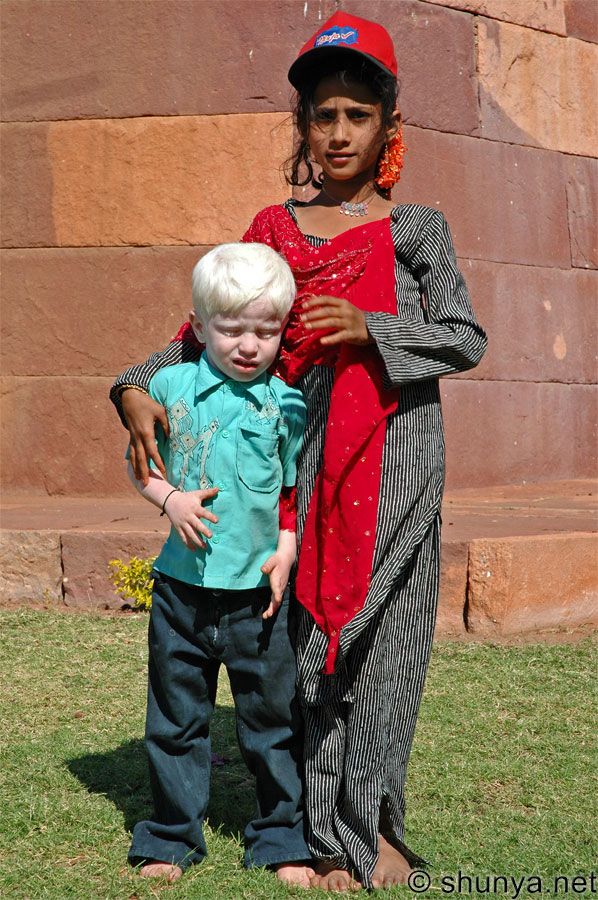
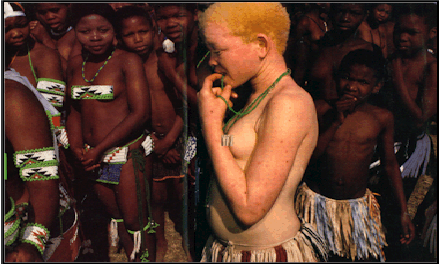
yeah, what the fuck are albinos anyway? are they free to choose whatever the fuck they want to?
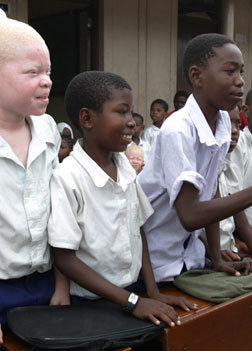
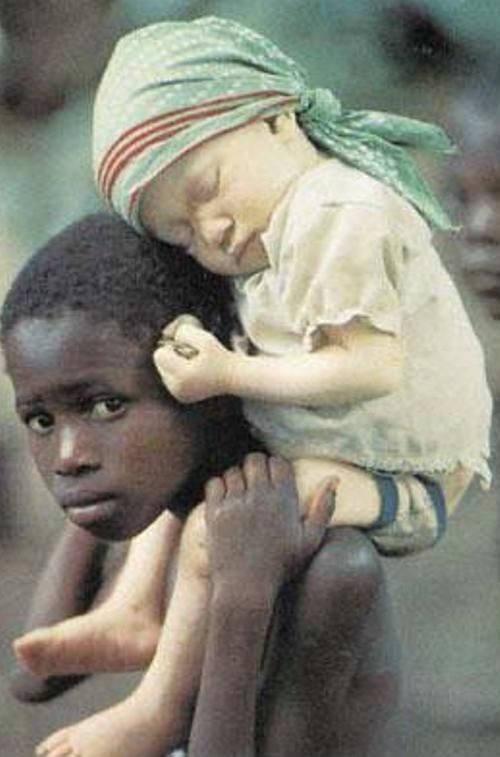
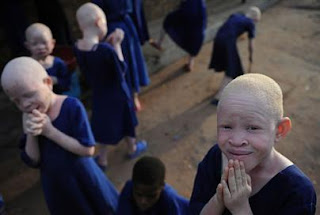
even though their skin/hair lacks pigment, albinos can still be from any ethnic background so they probably still refer to themselves by whatever their heritage is...

because i mean, just cuz somebody's albino doesn't make them white..

and even though their skin is white... (if they're not of european descent) usually they still don't look caucasian...
 

Gas One

Moderator
May 24, 2006
39,741
12,147
113
46
Downtown, Pittsburg. Southeast Dago.
#53
even though their skin/hair lacks pigment, albinos can still be from any ethnic background so they probably still refer to themselves by whatever their heritage is...

because i mean, just cuz somebody's albino doesn't make them white..

and even though their skin is white... (if they're not of european descent) usually they still don't look caucasian...
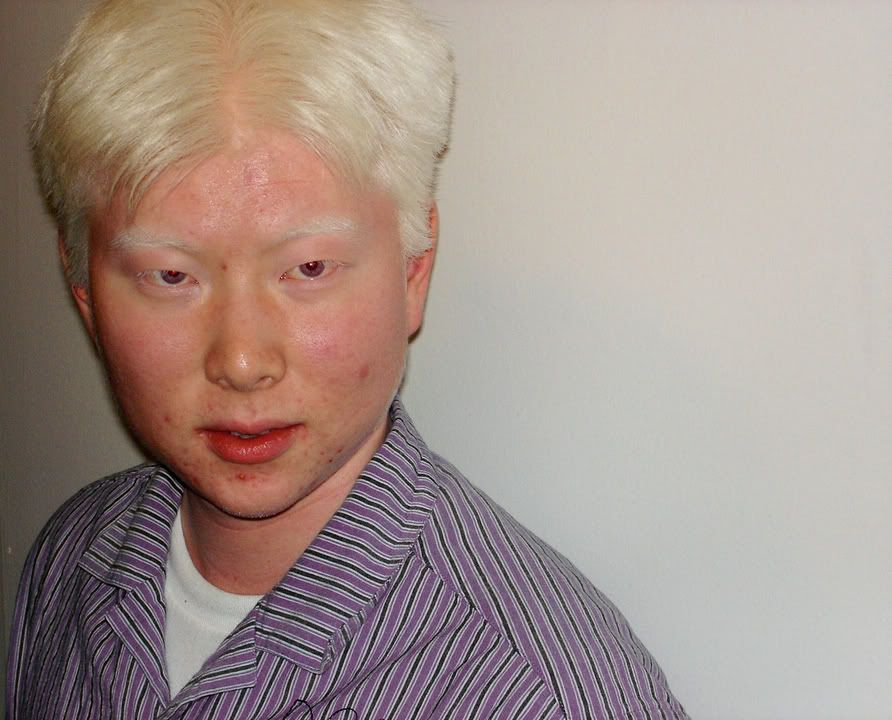
yeah, thats what i thought, but wasnt sure. ive seen many 'different looking' albinos too.

edit: except for the asian albino, wtf? lol wow