


Scientists Marvel at Deep Sea Discoveries
By RANDOLPH E. SCHMID, AP
WASHINGTON (Dec. 10) -- Peering deep into the sea, scientists are finding creatures more mysterious than many could have imagined. At one site, nearly 2 miles deep in the Atlantic, shrimp were living around a vent that was releasing water heated to 765 degrees Fahrenheit. Water surrounding the site was a chilly 36 degrees.An underwater peak in the Coral Sea was home to a type of shrimp thought to have gone extinct 50 million years ago.
More than 3 miles beneath the Sargasso Sea, in the Atlantic, researchers collected a dozen new species eating each other or living on organic material that drifts down from above.
"Animals seem to have found a way to make a living just about everywhere," said Jesse Ausubel of the Sloan Foundation, discussing the findings of year six of the census of marine life.
Added Ron O'Dor, a senior scientist with the census: "We can't find anyplace where we can't find anything new."
This year's update, released Sunday, is part of a study of life in the oceans that is scheduled for final publication in 2010. The census is an international effort supported by governments, divisions of the United Nations and private conservation organizations. About 2,000 researchers from 80 countries are participating.
Ausubel said there are nearly 16,000 known species of marine fish and 70,000 kinds of marine mammals. A couple of thousand have been discovered during the census.
The researchers conducted 19 ocean expeditions this year; a 20th continues in the Antarctic. In addition, they operated 128 nearshore sampling sites and, using satellites, followed more than 20 tagged species including sharks, squid, sea lions and albatross.
-- Shrimp, clams and mussels living near the super-hot thermal vent in the Atlantic, where they face pulses of water that is near-boiling despite shooting into the frigid sea.
-- In the sea surrounding the Antarctic, a community of marine life shrouded in darkness beneath more than 1,600 feet of ice. Sampling of this remote ocean yielded more new species than familiar ones.
-- Off the coast of New Jersey, 20 million fish swarming in a school the size of Manhattan.
-- Finding alive and well, in the Coral Sea, the type of shrimp called Neoglyphea neocaledonica, thought to have disappeared millions of years ago. Researchers nicknamed it the Jurassic shrimp.
-- Satellite tracking of tagged sooty shearwaters, small birds, that mapped the birds' 43,500-mile search for food in a giant figure eight over the Pacific Ocean, from New Zealand via Polynesia to foraging grounds in Japan, Alaska and California and then back. The birds averaged a surprising 217 miles daily. In some cases, a breeding pair made the entire journey together.
-- A new find, a 4-pound rock lobster discovered off Madagascar.
-- A single-cell creature big enough to see, in the Nazare Canyon off Portugal. The fragile new species was found 14,000 feet deep. It is enclosed within a plate-like shell, four-tenths of an inch in diameter, composed of mineral grains.
-- A new type of crab with a furry appearance, near Easter Island. It was so unusual it warranted a whole new family designation, Kiwaidae, named for Kiwa, the Polynesian goddess of shellfish. Its furry appearance justified its species name, hirsuta, meaning hairy.
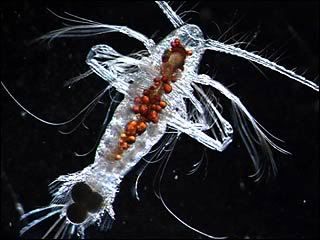
Researchers say they are finding rich diversity in the sea while working on a census of marine life. A deepwater copepod was discovered bearing its eggs.
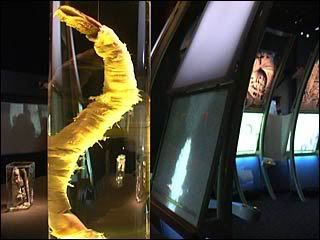
This giant tubeworm lives 8,000 feet below the surface around hydrothermal vents. Shrimp, clams and mussels were found deep in the Atlantic near boiling water.

Using a remotely operated vehicle, researchers recorded the hottest marine temperature ever measured in the Atlantic Ocean.
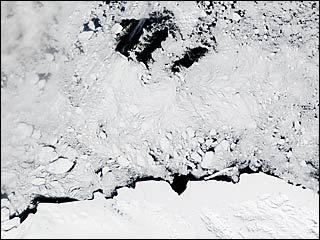
A sampling of marine life below 1,600 feet of ice in the sea surrounding the Antarctic yielded more new species than familiar ones.
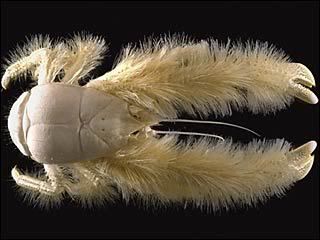
A new type of crab with a furry appearance, found near Easter Island in the Pacific Ocean, was so unusual it warranted a whole new family designation, Kiwaidae.
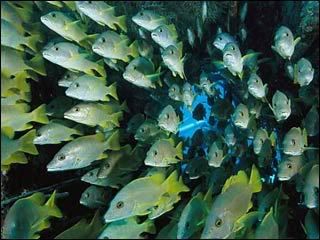
A school of fish swim near the Florida Keys. Off the coast of New Jersey, researchers discovered 20 million fish swarming in a school the size of Manhattan.
By RANDOLPH E. SCHMID, AP
WASHINGTON (Dec. 10) -- Peering deep into the sea, scientists are finding creatures more mysterious than many could have imagined. At one site, nearly 2 miles deep in the Atlantic, shrimp were living around a vent that was releasing water heated to 765 degrees Fahrenheit. Water surrounding the site was a chilly 36 degrees.An underwater peak in the Coral Sea was home to a type of shrimp thought to have gone extinct 50 million years ago.
More than 3 miles beneath the Sargasso Sea, in the Atlantic, researchers collected a dozen new species eating each other or living on organic material that drifts down from above.
"Animals seem to have found a way to make a living just about everywhere," said Jesse Ausubel of the Sloan Foundation, discussing the findings of year six of the census of marine life.
Added Ron O'Dor, a senior scientist with the census: "We can't find anyplace where we can't find anything new."
This year's update, released Sunday, is part of a study of life in the oceans that is scheduled for final publication in 2010. The census is an international effort supported by governments, divisions of the United Nations and private conservation organizations. About 2,000 researchers from 80 countries are participating.
Ausubel said there are nearly 16,000 known species of marine fish and 70,000 kinds of marine mammals. A couple of thousand have been discovered during the census.
The researchers conducted 19 ocean expeditions this year; a 20th continues in the Antarctic. In addition, they operated 128 nearshore sampling sites and, using satellites, followed more than 20 tagged species including sharks, squid, sea lions and albatross.
-- Shrimp, clams and mussels living near the super-hot thermal vent in the Atlantic, where they face pulses of water that is near-boiling despite shooting into the frigid sea.
-- In the sea surrounding the Antarctic, a community of marine life shrouded in darkness beneath more than 1,600 feet of ice. Sampling of this remote ocean yielded more new species than familiar ones.
-- Off the coast of New Jersey, 20 million fish swarming in a school the size of Manhattan.
-- Finding alive and well, in the Coral Sea, the type of shrimp called Neoglyphea neocaledonica, thought to have disappeared millions of years ago. Researchers nicknamed it the Jurassic shrimp.
-- Satellite tracking of tagged sooty shearwaters, small birds, that mapped the birds' 43,500-mile search for food in a giant figure eight over the Pacific Ocean, from New Zealand via Polynesia to foraging grounds in Japan, Alaska and California and then back. The birds averaged a surprising 217 miles daily. In some cases, a breeding pair made the entire journey together.
-- A new find, a 4-pound rock lobster discovered off Madagascar.
-- A single-cell creature big enough to see, in the Nazare Canyon off Portugal. The fragile new species was found 14,000 feet deep. It is enclosed within a plate-like shell, four-tenths of an inch in diameter, composed of mineral grains.
-- A new type of crab with a furry appearance, near Easter Island. It was so unusual it warranted a whole new family designation, Kiwaidae, named for Kiwa, the Polynesian goddess of shellfish. Its furry appearance justified its species name, hirsuta, meaning hairy.
Researchers say they are finding rich diversity in the sea while working on a census of marine life. A deepwater copepod was discovered bearing its eggs.
This giant tubeworm lives 8,000 feet below the surface around hydrothermal vents. Shrimp, clams and mussels were found deep in the Atlantic near boiling water.
Using a remotely operated vehicle, researchers recorded the hottest marine temperature ever measured in the Atlantic Ocean.
A sampling of marine life below 1,600 feet of ice in the sea surrounding the Antarctic yielded more new species than familiar ones.
A new type of crab with a furry appearance, found near Easter Island in the Pacific Ocean, was so unusual it warranted a whole new family designation, Kiwaidae.
A school of fish swim near the Florida Keys. Off the coast of New Jersey, researchers discovered 20 million fish swarming in a school the size of Manhattan.


![[ n a v ]](/xf/data/avatars/s/13/13106.jpg?1534684272)

